AMERICA'S TOUGHEST
High-Carb is hot right now - but does it actually matter?
Interesting science has devolved into an arms race in endurance sports. Pros from the Tour and the Ultra circuit are bragging about 100-120 grams per hour, nutrition companies are rushing out dual-carb products, and social media influencers are in a bottle-math fever-dream. The science behind it is solid - carbs are the body's fastest fuel. But: the real questions for us are how much are you actually burning, and can you do it for days on end? In our world, races last days - adventure racing world championships is coming up, and winners are expected to finish in 8 days!! Nutrition plans are great, but as soon as you switch from your high-carb ultra-fuel to a cheeseburger or burrito - you're going to fall off a cliff performance-wise.
What the Science Actually Measures
Lab studies are clear: carbs fuel performance. Typical findings:
- Acute performance windows: Single-source carbs top out at ~60 g/hr; multi-transportable carbs (glucose + fructose) can reach ~90 g/hr oxidation and improve time-to-exhaustion or time-trial performance.
- High-end intake hype: Pros may consume 100–120 g/hr. Evidence that this provides universal performance gains is mixed; oxidation may plateau, and gut tolerance varies widely.
- Diminishing returns: Once you exceed ~90 g/hr, extra carbs often just sit in the gut, risking GI issues without clear gains.
The lab numbers are useful, but they treat many real-world variables as “noise.”
What the Lab Treats as Noise
Endurace racing isn't done under controlled conditions. Some overlooked factors:
- Palatability & adherence: Can you realistically choke down 120g/hr of carbs without gagging (and burn all of them)?
- Repeatability: Day-after-day stages, ultras, or expedition races aren't one-off experiments. It usually doesn't matter at all how you feel on day one, your overall time is what matters. In most races, consistent performance beats sprint speed during the first hours.
- GI tolerance: Lab studies rarely simulate heat, altitude, or fatigue. Nausea and cramps are common in ultra finishers (some studies estimate it as high as 90%!).
- 24+ hour context: Logistics, taste fatigue, and cumulative strain often prevent athletes from hitting lab-style targets. Gus are heavy, 120g/hr is a wild amount of mass to bring on a long stage! We had a 24h+ opening stage in the Endless Mountains Expedition Race - that would have been 3kg of sugar per person!
Protein Matters - Even if the Lab Shrugs
Labs generally test carbs in isolation, so protein doesn't move the needle for a 3-hour TT. But real-world endurance is measured in hours and days:
- Muscle preservation: Daily protein prevents lean mass loss, especially in multi-day races or ultra events.
- Palatability: In long events, having protein fights "meat hunger" and makes the drink taste a lot more like a yummy smoothie, and less like an obnoxious sugary drink.
- Recovery & how-you-feel: Protein aids repair, reduces soreness, and helps you bounce back for the next session.
- Gut tolerance: Moderate protein in fuels (like pea protein) doesn’t block carb absorption and can make long feeding more sustainable. (PubMed)
Put simply: protein isn’t about short-term watts — it’s about keeping your body functional over hours and days, and keeping your hunger at bay, so you don't wind up tucking into a sloppy burrito at the transition area. Believe me - we've done it, and it's been a mistake every time.
Practical takeaways:
- Outcomes matter, the math doesn't. As far as I'm aware, carbs-per-hour isn't a winning criteria (though it might make fun preem). Race time, distance, etc are what matters.
- Don't overload the stomach. The higher the carbs, the higher the risk of GI distress, especially if you're pushing 90+g/hr.
- Train the gut. During longer efforts, deliberately push the boundaries in terms of what you're absorbing. Start at 50g/hr, but push higher and see where you land.
- Recovery matters. Protein helps your legs feel better and perform better the next day.
What we're doing with 4-hour-fuel.
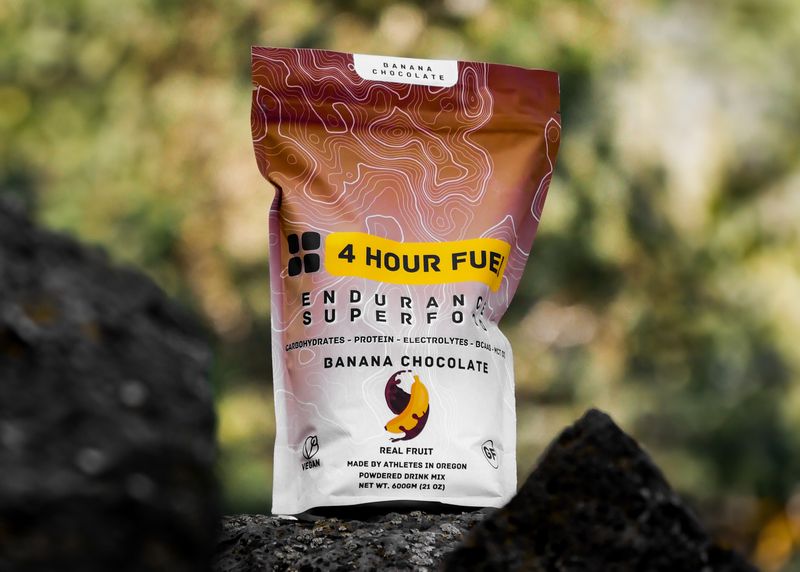
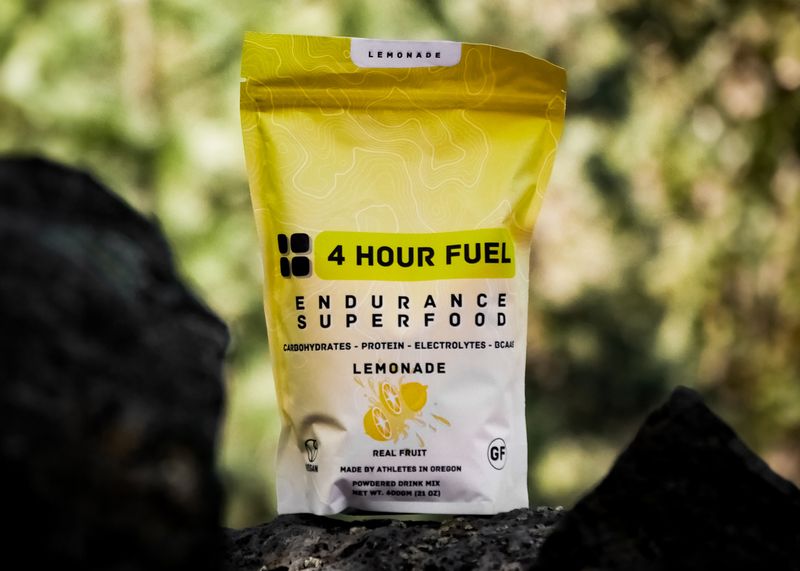
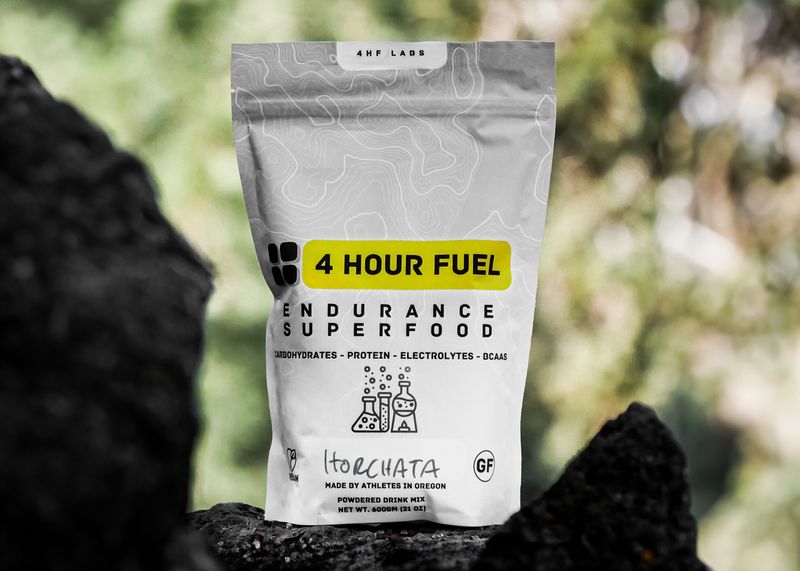
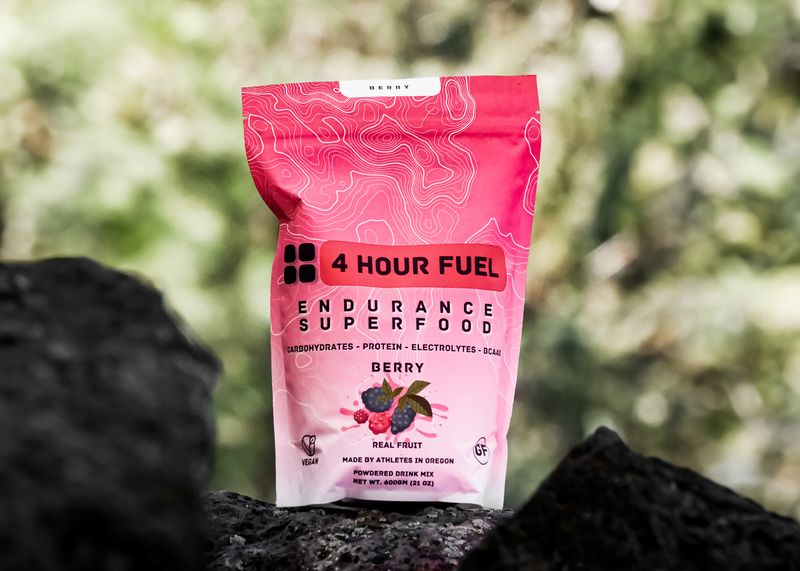
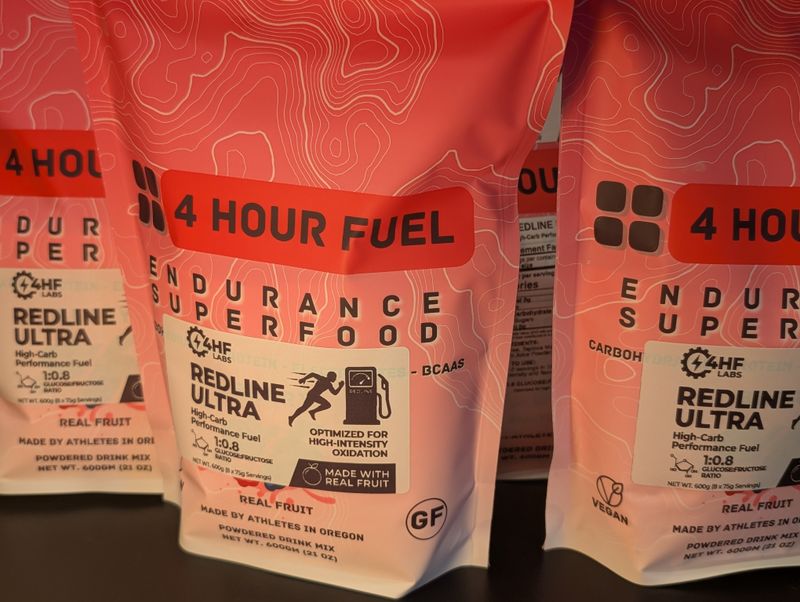
4HF is already a high-carb fuel, most of our mixes use dual-source carbs (our savory mixes are the exception), and at the practical amounts our athletes use (between 50-80g/hr) has a small amount of protein (5g-8g/hr) which is unlikely to interfere with the carb absorption, and contributes massively to adherence. We flavor our lemon, berry, and banana chocolate mixes with primarily real fruit powder, which makes them taste a lot more like a refreshing smoothie than a gel or traditional carb source. We also aim to make it as easy to use in the field as possible. Mixing 4 hours worth of food in a minute is way easier than rooting around in your pack for the next few hours worth of bars, gels, and candy, and then trying not to litter all the wrappers along the way.